

Mosquito Habitat Mapper
Why Do Scientists Study Mosquito Habitats?
Invasive mosquito species are spreading rapidly across Southern California with the potential to transmit viruses that cause serious diseases such as West Nile virus, dengue, and Zika. Surveillance and breeding site mitigation are key to preventing mosquito-borne disease outbreaks.
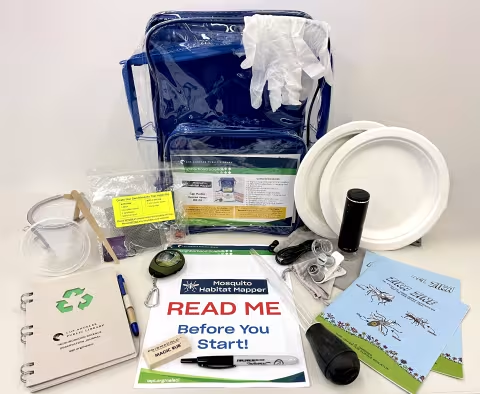
What's in the Kit?
- Mosquito trap supplies
- 1 turkey baster
- 1 plastic container with lid
- 2 white paper plates
- 1 clip-on cellphone magnifier
- 1 plastic tweezer
- 1 glass vial of rubbing alcohol
- 1 pair of gloves
- 1 sharpie
- 1 eraser
- 1 observation journal
- 1 mini GPS location finder
- 1 USB charging cord
- 1 book: Zika Zine
- 1 instructions packet
- Safety rules
How to Help Scientists Collect Data?
Step 1
Turn on the Internet/Wi-Fi connectivity and GPS tracker of your smart device (i.e., smartphone or tablet). You can also use Google Maps or download a free GPS-Map app for your iOS Apple or Android device.
Step 2
Go to the Taking Observation tab of the GLOBE Observer’s Mosquito Habitat Mapper Protocol page for instructions on how to conduct, record, and submit observations.
Watch the following two video tutorials:
Step 3
Download and launch the GLOBE Observer app.
Step 4
Follow the instructions in the app to create an account and sign in. Enter GLID5WFS for referral code to join Team LAPL (Los Angeles Public Library).
Step 5
Read the messages on screen and tap Training Complete.
Step 6
Choose Allow or Not Allow for push notifications from the GLOBE Observer app.
Step 7
Read the Privacy and Terms of Use, then select I Agree to proceed.
Step 8
On the GLOBE Observer app’s Home screen, tap the Mosquito Habitat Mapper protocol.
Step 9
For first-time users, tap Next to read the introduction. At the end of the introduction message, check the box "Do not show this again" if you do not want to go through it again the next time you sign in.
Step 10
On the GLOBE Mosquito Habitat Mapper protocol home page, tap New Mosquito Habitat Observation and follow the instructions on screen to record, save, and submit your observation.
Useful Tip
If you prefer to submit your observation data anonymously without creating a GLOBE account, go to the Observation Anonymous page and select GLOBE Observer: Mosquito Habitat Mapper to access the webform. Complete all fields on the form and select Submit.
Step 11 (Optional)
Making a Mosquito Trap
To conduct observations using your own mosquito trap, use the supplies in the kit and follow the instructions to build and set it up. To record your observations, tap New Mosquito Habitat Observation in the app, and select Larvae/Adult Trap and photograph the location of your trap. Now make your observations of any larvae or any eggs in your trap. Make sure to observe your trap and submit your observation at least once a week.
Sample Collection Tutorial
Step 12
If you do find mosquito larvae in your trap or at the observation site, follow the instructions in the video tutorial to collect larvae samples using the small plastic container with a lid, turkey baster, paper plates, and clip-on cell phone magnifier in the kit.
Step 13
Tap open the Mosquito Habitat Mapper protocol on the GLOBE Observer app and go through the steps on screen to identify and submit your mosquito larvae observations.
Important Note
When you are done with your observation, be sure to eliminate the potential mosquito breeding habitat by tipping and tossing any stagnant water. To discard the trap you made, gently shake the trap to drown the adult mosquitoes and dump out any still water in the container.
Step 14
Be sure to put all equipment, supplies, and instructions packet back into the bag and return the kit to the library so someone else can contribute.
Mosquito Habitat Mapper Curriculum
Lessons
Lessons are short moments of NGSS (Next Generation Science Standards)- aligned direct instruction, delivered in video or slide format, that inform participants of the knowledge necessary to participate in Citizen Science activities.
Activities
Activities frame moments of Citizen Science participation through hands-on exploration and creation, including using the Neighborhood Science kits to collect data.
Why are Mosquitoes Dangerous?
15-minute lesson
Mosquitoes and their itchy bites can be annoying, but they can also be dangerous. Many species of mosquitoes found right here in the United States carry dangerous illnesses that can make you, your family, and even your pets very sick.
Lesson Materials
What is a Mosquito Habitat?
15-minute activity
Understanding where mosquitoes live is the first step in reducing mosquito bites. Mosquitoes like water because mosquito larvae and pupae live in the water with little or no flow. Different types of water attract different types of mosquitoes.
Supplemental Materials
How to Map Mosquito Habitats
50-minute activity
Surveillance and mitigation of breeding sites are key to preventing mosquito-borne disease outbreaks. In this activity, we will use the Neighborhood Science Kit to locate, record, and, if possible, eliminate breeding sites for mosquitoes.
Lesson Materials
Living With Mosquitoes
10-minute lesson
Many mosquitoes – harmless and otherwise – serve an important biological purpose. They can help pollinate plants, as they also feed on nectar and provide a vital food source for larger animals. Living alongside mosquitoes while reducing their harm is the best path forward.